










SRM Online

Bachelor of Computer Applications

Home > Courses > Bachelor of Computer Applications

Learn from
India's Top Ranked
Institute

Ranked 12 in MHRD-NIRF*

*National Institutional Ranking Framework

Accredited with the highest NAAC* ‘A++’ grade*

*National Assessment and Accreditation Council

Globally ranked 4-Star university with a ‘Diamond’ rating by QS-IGAUGE India

*QS World University Rankings

Why Choose this Program?

Comprehensive
Curriculum

Curriculum designed by leading academicians and industry experts

Choose from specializations like Data Science

Immersive Online
Learning Experience

LIVE Online Learning designed for Working Professionals

Taught by India’s top management faculty

Student Support
Services

AI Based Students Support, 24*5 Chat Support, Comprehensive Helpdesk Support

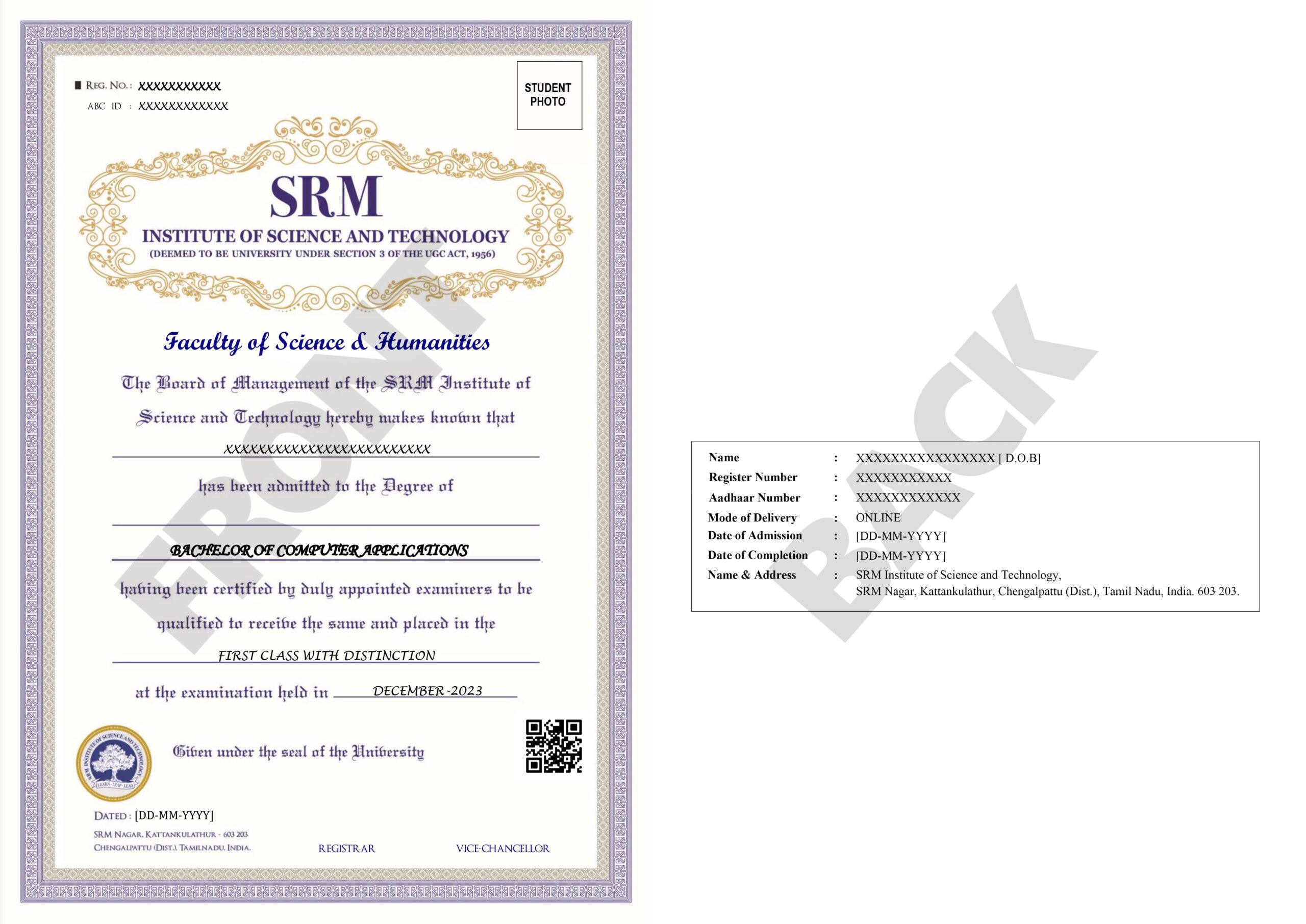
Degree from SRM

*AICTE approved

Programme Fee

Domestic Structure

Online Learning

21,500* / Semester

*Exclusive of Examination fee

International Structure

Online Learning

$ 634* / Year

*Exclusive of Examination fee

Note: In addition to the tuition fees, the Exam fees for the semester and fees for certificates will be charged separately

Students Gateway

Learn from one of the best management schools in India

Live Online Learning | UGC Entitled | AICTE Recognized | Category One University

Bachelor of Computer Applications (BCA) is a three-year degree program which imparts an in-depth knowledge of computer applications, information technology theory, and programming practice by exposing them to various domains like Python, AI(Artificial Intelligence), Statistics with R, Machine Learning, Data Visualization and Programming Analytics. The courses in this programme are meant to provide possibilities and a means for students to transform themselves into industry in the diverse field of IT experts. Providing Students with the ability to successfully assess and give solutions for data visualization methodologies.

This curriculum allows participants to work as Operations Executives, Database Administrators in IT-enabled service sectors, System Analysts & Data Analysts, Web Application Developers, Software Testing, Consultants, and Network System Developers.

Curriculum

Semester I

Course Code Course Title T VL PI Credits
V26UCA101Business English3
V26UCA102Introduction to Data Science4
V26UCA103Programming for Problem Solving4
V26UCA104Programming in C – Virtual Lab2
V26UCA105Data Analysis using Excel – Virtual Lab3
V26UCA106Discrete Mathematical Structures4
Total Learning Credits20

Semester II

Course Code Course Title T VL PI Credits
V26UCA201Programming in Java4
V26UCA202Programming in Java – Virtual Lab2
V26UCA203Data Structures and Algorithms4
V26UCA204Database Systems4
V26UCA205Databases for Data Science – Virtual Lab2
V26UCA206Mathematical Foundation4
Total Learning Credits20

Semester III

Course Code Course Title T VL PI Credits
V26UCA301Python Programming4
V26UCA302Exploratory Data Analysis – Virtual Lab4
V26UCA303Introduction to Artificial Intelligence4
V26UCA304Introduction to Cloud Computing4
V26UCA305Statistics with R4
V26UCA306Internship2
Total Learning Credits22

Semester IV

Course Code Course Title T VL PI Credits
V26UCA401Programming for Analytics4
V26UCA402Machine Learning4
V26UCA403Data Visualization4
V26UCA404Data Visualization – Virtual Lab2
V26UCA405Data Pre-processing Techniques4
V26UCA406Data Mining & Warehousing4
Total Learning Credits22

Semester V

Course Code Course Title T VL PI Credits
V26UCA501Deep Learning4
V26UCA502Modern Database Systems – Virtual Lab2
V26UCA503Application Development on Cloud4
V26UCA504Application Development on Cloud – Virtual Lab2
V26UCA505Big Data Analytics4
V26UCA506Natural Language Processing4
V26UCA507Reinforcement Learning for AI0
Total Learning Credits20

Semester - VI

Course Code Course Title T VL PI Credits
V26UCA601Design Thinking4
V26UCA602Fundamentals of Generative AI4
V26UCA603Project Work8
Total Learning Credits16

Bachelor of Computer Applications (BCA) is an undergraduate degree program for 3 years in computer applications that is delivered entirely online. The program is designed to provide students with a strong foundation in computer programming, database management, software development, and other key areas of computer science.

PROGRAM OBJECTIVES
  1. Equip students with a comprehensive understanding of core computer science principles and technical skills in programming, software development, and system design to enable them to tackle complex computing challenges effectively.
  2. Provide practical experience through real-world projects, case studies, and simulations, enabling students to apply theoretical knowledge to practical scenarios and build a robust portfolio.
  3. Prepare students to adapt to evolving technologies and industry trends by promoting a culture of continuous learning and professional development throughout their careers.
LEARNING OUTCOMES

After completing the programme, the learners will be capable of

  1. Conditional control, looping statements, arrays, strings, user-defined and predefined functions, and more will be understood by the learner.
  2. Basic gates, Boolean expression simplification, and K-map approaches, various operators, data types, variables, and tokens will be understood by the learner.
  3. Gaining a basic understanding of algorithms and complexity The learner will comprehend how to evaluate various algorithms using asymptotic notations.
  4. The learner will understand and develop the basics of operating systems, OOP, and process management.
  5. The learner will comprehend the concepts of synchronization and scheduling of CPUs.

SRM Online Learning Portal: Remote Proctored Examination System (RPES) - Learner's Checklist

  1.  Examination Mode: Remote Online Proctored Examination only (Theory/Practical/Project). No physical appearance is required.
  2.  Online Examination Platform: SRM Online Remote Proctored Examination System.
  3.  Mock test: It will be conducted before every end semester examination for software practice.
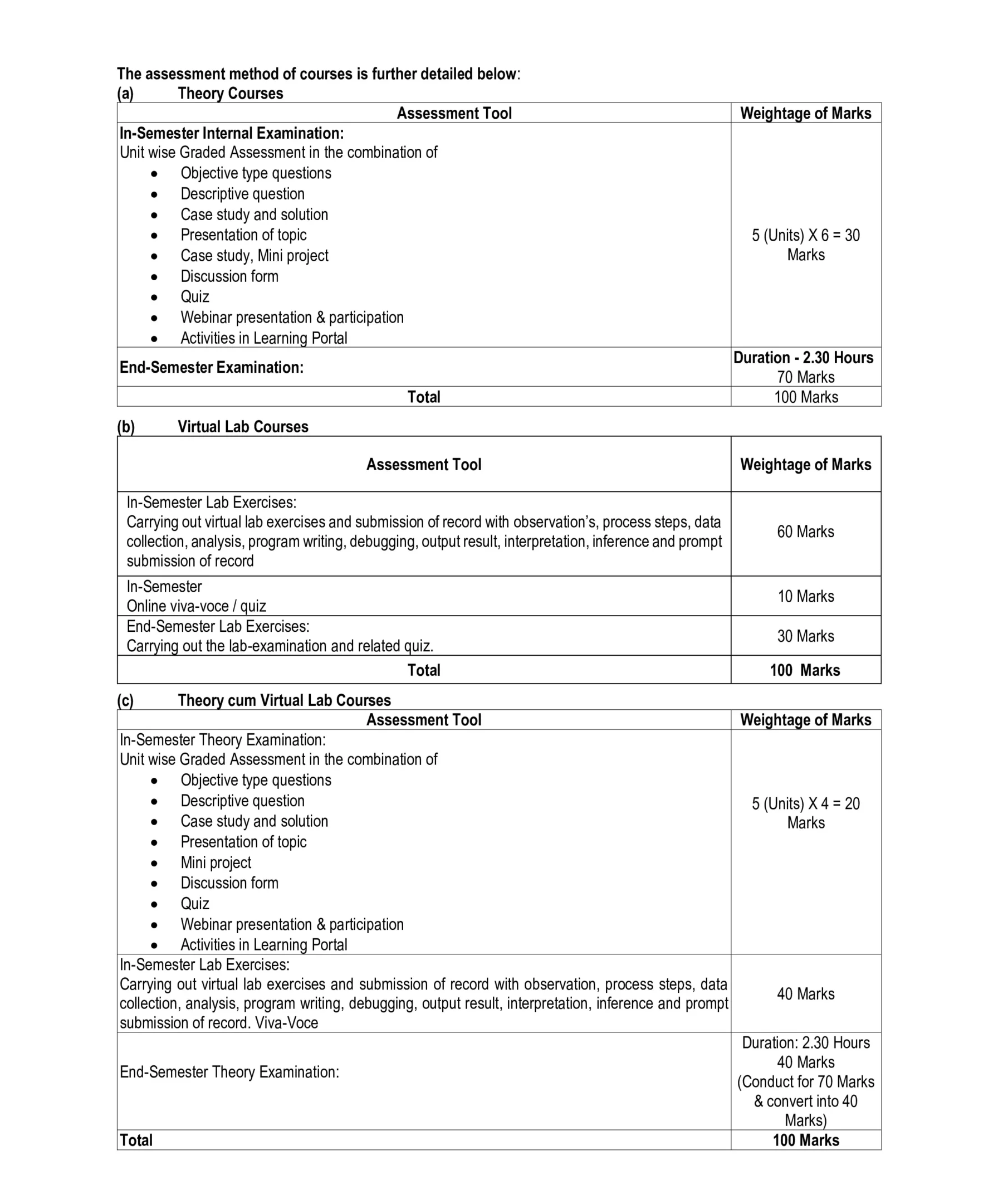
  4.  End semester exam Pattern: Objective Type (MCQs) and Descriptive questions (Essay/Case study).
  5.  for descriptive questions:  Students need to upload the scanned answer sheet in picture format (JPG) before the exam time gets over into the RPES.
  6.  Examination Hardware/Software Requirements: Laptop or Desktop with webcam, Windows Operating System, Good internet bandwidth, Mobile or Scanner for scanning answer sheet(s), A4 sheets as per your requirement, pen (blue or black), pencil if required. 
  7.  e-Answer sheet: Scanned answer sheet (handwritten in A4 sheets) should be uploaded before the exam time ends into the RPES.
  8.  Authentication: SRMIST ID card and hall ticket / Admit card is mandatory to appear for the exam. 
  9.  Back Paper(s): Learners can appear for Arrears / Back papers along with every next semester till the time of maximum number of attempts permitted as per regulation.

A pass in (10+2) Higher secondary from a recognized Board / Institution/ including NIOS, pass with 50% in the qualifying exams.
OR
A pass (10+ 3 or 10+2+2 pattern) in Diploma in Engineering from a recognized institution or competent authority with a minimum aggregate of 50%.

Mandatory Subject:

  1. At least one amongst Mathematics I Business Mathematics / Statistics / Allied Mathematics. NCrF 4.0 Level (minimum)]

Our Program Advantage

Learn from a comprehensive curriculum taught by world-class faculty. Get guidance on your learning journey, and access career services.

CONVENIENT LEARNING FORMATS

Live Online Learning

PROGRAMME BENEFITS

Real-World Class Students

MAXIMUM FLEXIBILITY

Week – End Live Interactive Session

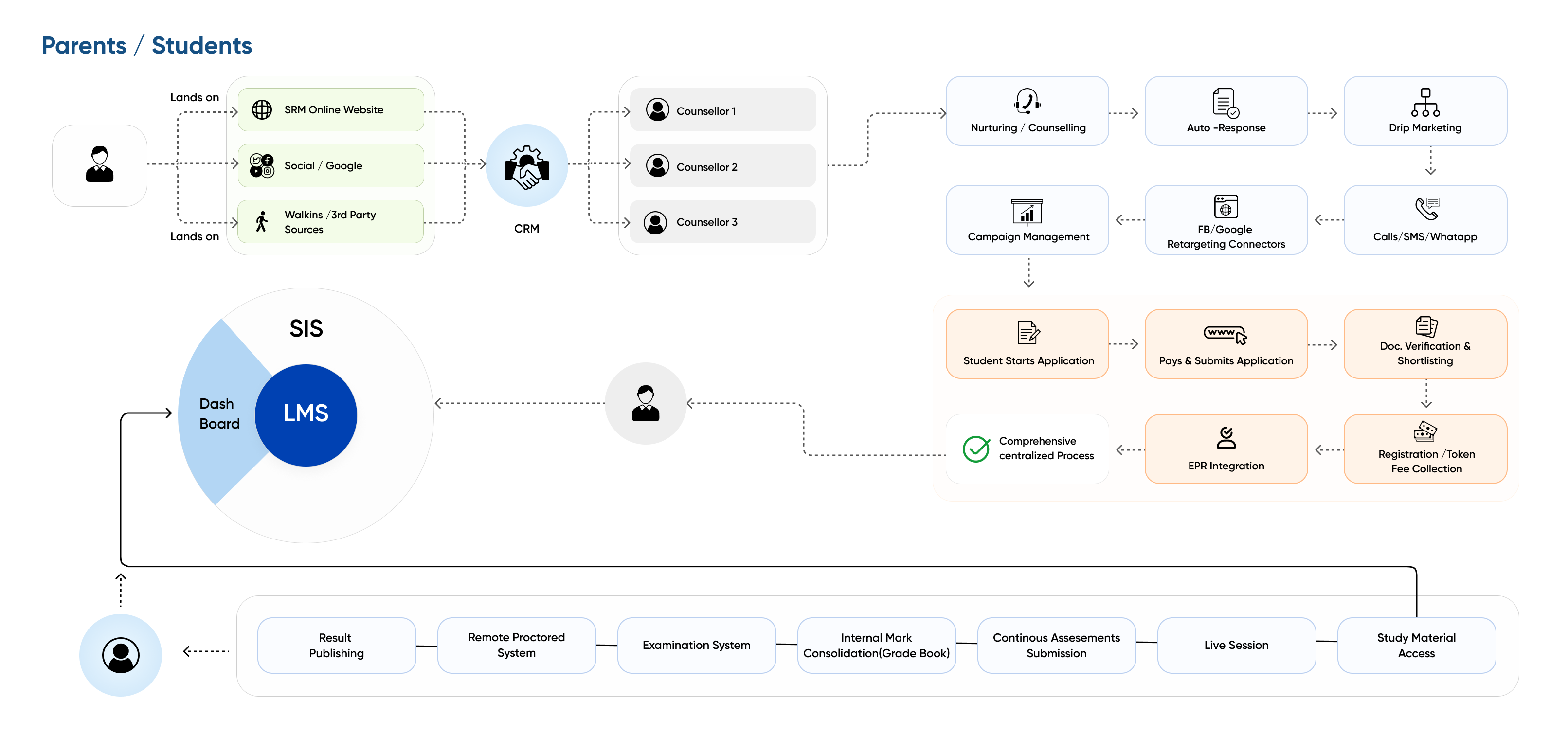
Admission Process

Step - 1

Application submission + Upload of documents

Step - 2

Selection Process

Step - 3

Selection intimation and fee payment

Step - 4

Formal enrolment of the program