SRM Online

Master of Computer Applications

Home > Courses > Master of Computer Applications

Learn from
India's Top Ranked
Institute

Ranked 12 in MHRD-NIRF*

*National Institutional Ranking Framework

Accredited with the highest NAAC* ‘A++’ grade*

*National Assessment and Accreditation Council

Globally ranked 4-Star university with a ‘Diamond’ rating by QS-IGAUGE India

*QS World University Rankings

Why Choose this Program?

Comprehensive
Curriculum

Curriculum designed by leading academicians and industry experts

Immersive Online
Learning Experience

LIVE Online Learning designed for Working Professionals

Taught by India’s top management faculty

Student Support
Services

AI Based Students Support, 24*5 Chat Support, Comprehensive Helpdesk Support

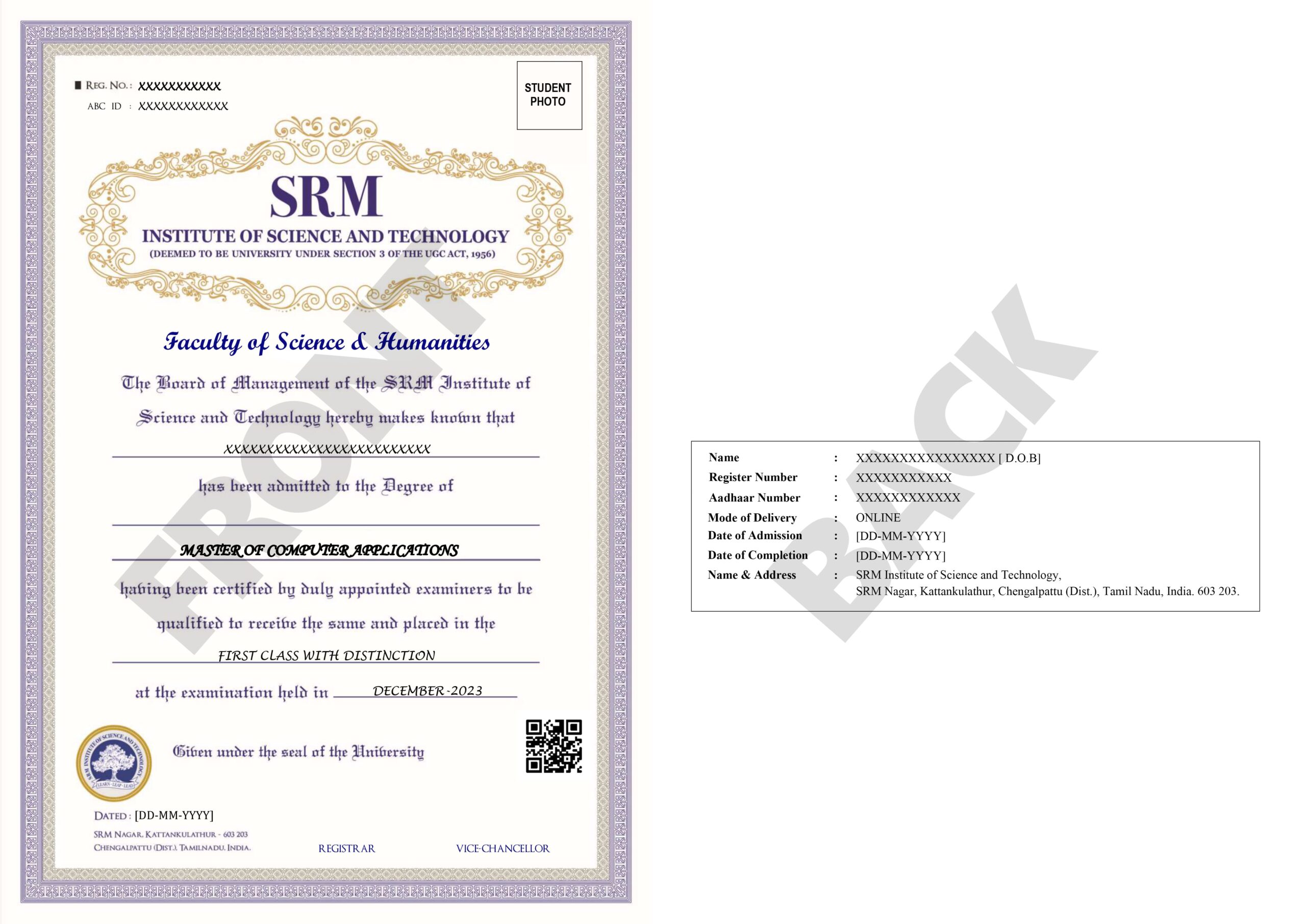
Degree from SRM

*AICTE approved

Programme Fee

Domestic Structure

Online Learning

37,500* / Semester

*Exclusive of Examination fee

International Structure

Online Learning

$ 1050* / Year

*Exclusive of Examination fee

Note: In addition to the tuition fees, the Exam fees for the semester and fees for certificates will be charged separately

Students Gateway

Learn from one of the best management schools in India

Live Online Learning | UGC Entitled | AICTE Recognized | Category One University

The MCA is a two-year degree programme which includes computer science, mathematics & statistics, System science concepts, non-core computer courses, and software design & development. Students will exhibit practical knowledge of mathematics, computer science, and management in the job situation. Students will use theory and experience, as well as competencies acquired across functional areas, while designing software applications. Students will apply research and information technology abilities in a specific setting to improve and sustain individual and organization performance.

Highlights of the course: Python Programming, Android Application Development, Software Testing, Data Analysis using R, Artificial Intelligence & Machine Learning, Cloud Computing, Internet of Things(IoT),Social Network Analysis, Data warehouse and Data Mining

After completing MCA the candidates can apply for the following profiles:Software Developer , Computer System Analyst, Software Engineer or Programmer, Database Administrator , Software Publisher, Software Application Architect, Software Consultant, Hardware Engineer, Web Designer/Web Developer, Senior Technical Consultant, Project Manager

Curriculum

Semester I

Course Code Course Title Course Type Credits
V26PCA101 Object Oriented Programming using Java Theory 4
V26PCA102 Operating System Theory 4
V26PCA103 Database Technology Theory 4
V26PCA104 Software Engineering Theory 4
V26PCA105 Advanced Database Technology Lab Practical / Lab 2
V26PCA106 Java Programming Lab Practical / Lab 2
V26PCA107 Career Advancement I Purely Internal 3
V26PCA108 Mathematical Foundation of Computer Applications (Bridge Course) Theory 0
Total Credits 23

*Bridge Course

Semester II

Course Code Course Title Course Type Credits
V26PCA201 Programming using Python Theory 4
V26PCA202 Computer Communication Theory 4
V26PCA203 Modern Optimization Techniques Theory 4
Elective Course - 1 Learners are required to choose ONE elective from the domain of their choice. Elective 4
V26PCA204 Data Analysis Using R Practical / Lab 2
V26PCA205 Python Programming Lab Practical / Lab 2
V26PCA206 Career Advancement II Purely Internal 3
Total Credits 23

Semester III

Course Code Course Title Course Type Credits
V26PCA301 Design and Analysis of Algorithms Theory 4
Elective Course - 2 Choose ONE Group A elective from the same domain selected in Semester II. Elective 4
Elective Course - 3 Choose ONE Group B elective from the same domain selected in Semester II. Elective 4
V26PCA302 OOPS Lab Practical / Lab 2
V26PCA303 Mini Project Project 5
V26PCA304 Career Advancement III Purely Internal 3
Total Credits 22

Semester IV

Course Code Course Title Course Type Credits
V26PCA401 Capstone Project Project 12
Total Credits 12
Overall Credits 80

Electives - Semester II

Domain Course Code Course Title Credits
General Computer Applications V26PGA201 Android Applications Development 4
V26PGA202 Full Stack Development 4
Generative AI V26PAI201 Fundamentals of Generative AI 4
V26PAI202 Natural Language Processing 4
Cyber Security and Forensics V26PCY201 Cyber Security 4
V26PCY202 Security Audit and Risk Assessment 4

Electives - Semester III (Group A)

Domain Course Code Course Title Credits
General Computer Applications V26PGA301A Artificial Intelligence 4
V26PGA302A Cloud Computing and Virtualization 4
Generative AI V26PAI301A Generative AI and Large Language Models 4
V26PAI302A Building Conversational AI for Human Resources 4
Cyber Security and Forensics V26PCY301A Cyber Laws and Ethics 4
V26PCY302A Cyber Forensics 4

Electives - Semester III (Group B)

Domain Course Code Course Title Credits
General Computer Applications V26PGA301B Software Project Management 4
V26PGA302B Data Warehouse and Data Mining 4
Generative AI V26PAI301B Advanced Techniques in Generative AI 4
V26PAI302B Adaptive AI in Data Analytics and Predictive Modeling 4
Cyber Security and Forensics V26PCY301B Cyber Security Governance, Risk and Compliance 4
V26PCY302B Cyber Law and Security 4

Legend: T = Theory, VL = Virtual Lab, PI = Purely Internal Courses, C = Credits

Master of Computer Applications (MCA) is a 2-years (four semesters) professional Master’s Degree in computer science awarded in online. The course is designed to meet the growing demand for qualified professionals in the field of Information Technology.

PROGRAM OBJECTIVES
  1. To prepare graduate students for productive careers in the software industry and academia by providing an outstanding environment for teaching and research in the core and emerging areas of the discipline.
  2. To Develop application and thus has more emphasis on the latest programming language and tools to develop better and faster applications.
  3. To Design, execute and interpret the software with real time data and synthesis the information to reach suitable conclusions.
  4. To provide opportunities for acquiring in-depth knowledge of fundamental concepts and programming skills for holistic development.
  5. To apply current tools, technologies and research to create systems for solving industry- oriented problems.
LEARNING OUTCOMES
  1. After completing the programme, the learners will be capable of
  2. Develop an ability to apply knowledge in the computing discipline.
  3. Develop ability to design and conduct experiments, as well as interpret data
  4. Develop ability to demonstrate team work with the ability of leadership, analytical reasoning for solving time critical problems and strong human values for responsible professional.
  5. Develop ability to use current technologies, skills and models for computing practice.
  6. Develop ability to use research, experiment, contemporary issues to solve industrial problems.

SRM Online Learning Portal: Remote Proctored Examination System (RPES) - Learner's Checklist

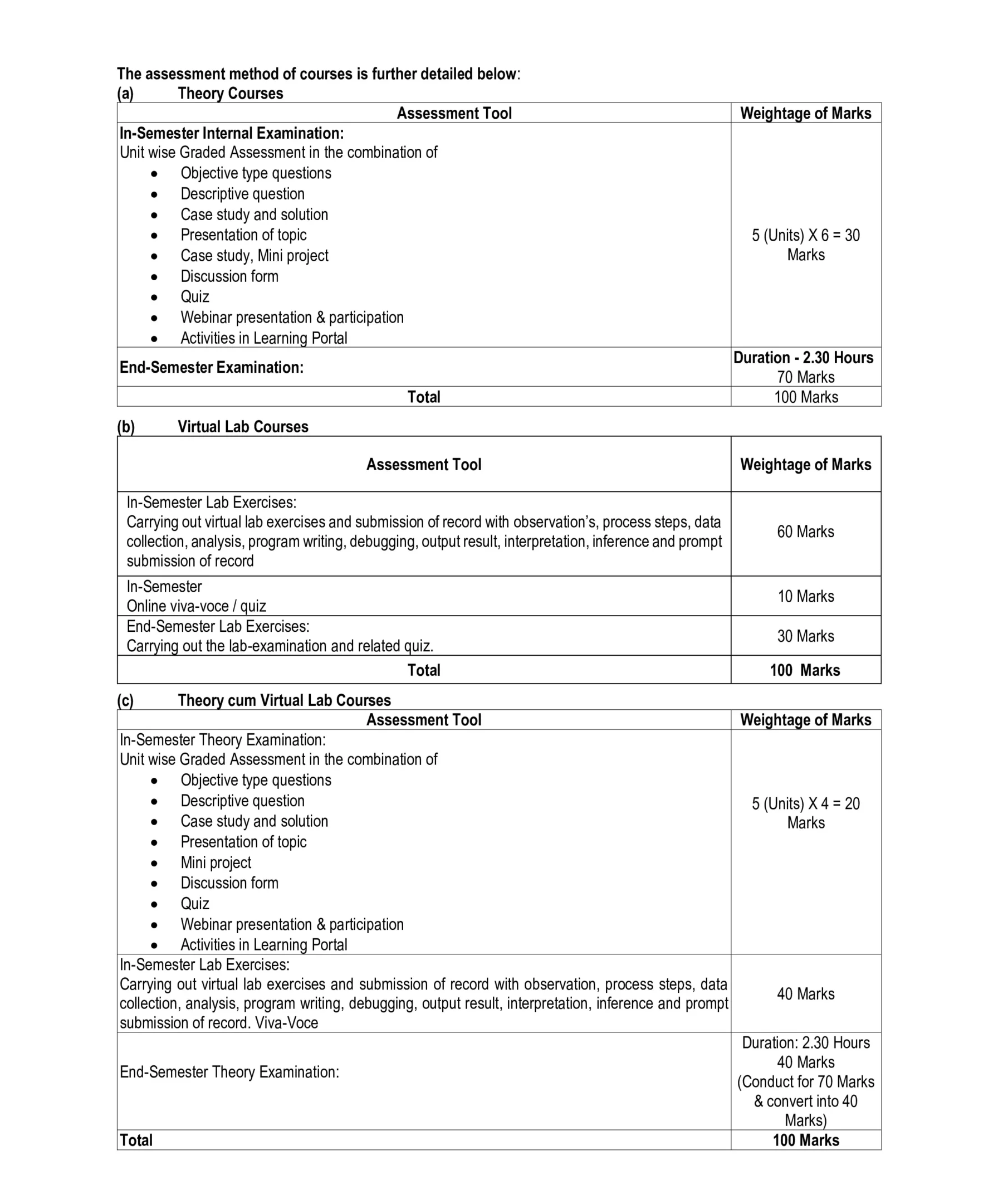
  1.  Examination Mode: Remote Online Proctored Examination only (Theory/Practical/Project). No physical appearance is required.
  2.  Online Examination Platform: SRM Online Remote Proctored Examination System.
  3.  Mock test: It will be conducted before every end semester examination for software practice.
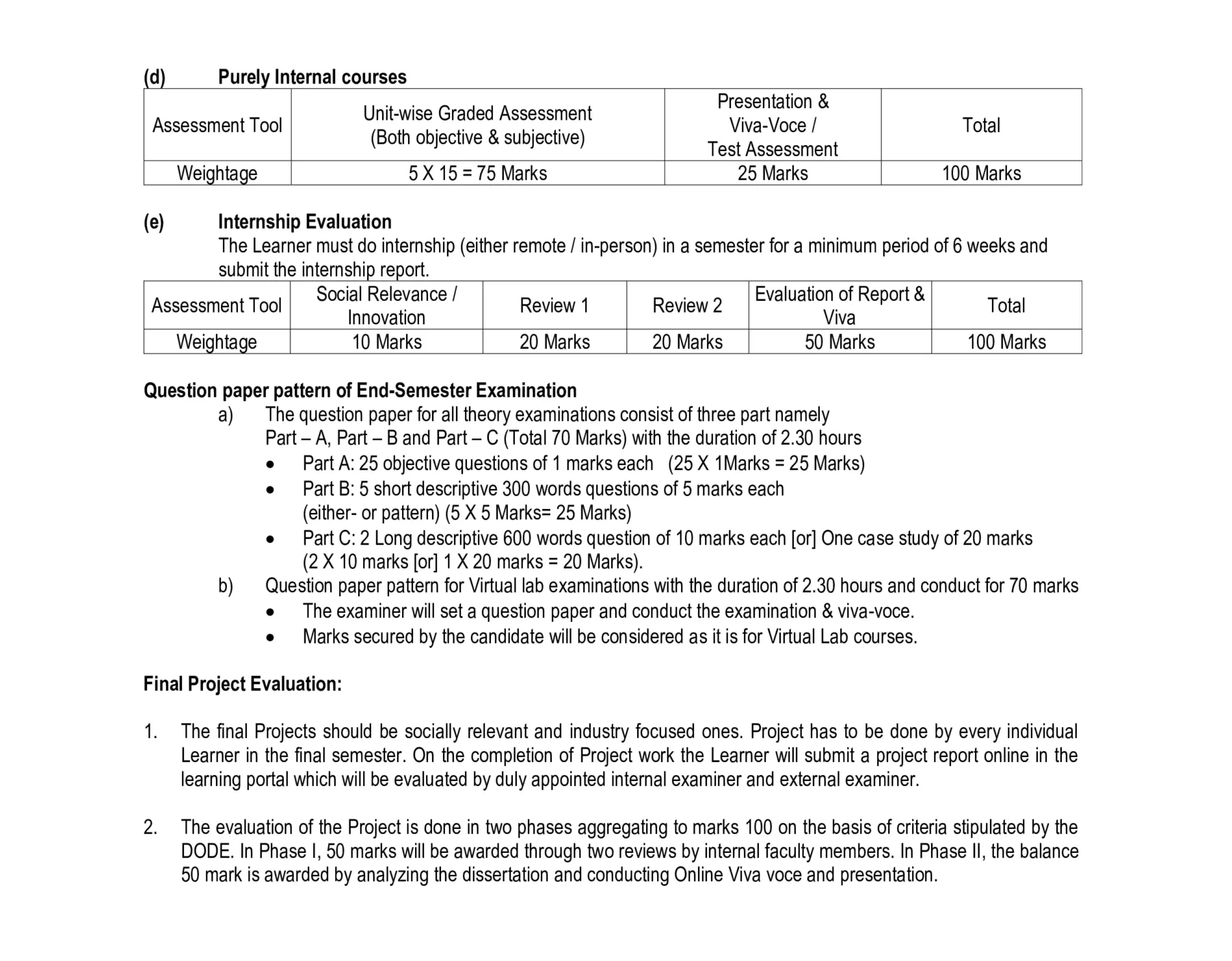
  4.  End semester exam Pattern: Objective Type (MCQs) and Descriptive questions (Essay/Case study).
  5.  for descriptive questions:  Students need to upload the scanned answer sheet in picture format (JPG) before the exam time gets over into the RPES.
  6.  Examination Hardware/Software Requirements: Laptop or Desktop with webcam, Windows Operating System, Good internet bandwidth, Mobile or Scanner for scanning answer sheet(s), A4 sheets as per your requirement, pen (blue or black), pencil if required. 
  7.  e-Answer sheet: Scanned answer sheet (handwritten in A4 sheets) should be uploaded before the exam time ends into the RPES.
  8.  Authentication: SRMIST ID card and hall ticket / Admit card is mandatory to appear for the exam. 
  9.  Back Paper(s): Learners can appear for Arrears / Back papers along with every next semester till the time of maximum number of attempts permitted as per regulation.
  1. Passed any graduation degree (e.g.: B.E. / B.Tech./B. Sc / B.Com. / B.A./ B. Voc ./ BCA etc.,) preferably with Mathematics/Statistics at 10+2 level or at Graduation level.
  2. Obtained at least 50% marks in the qualifying examination.
  3. (As per university regulations, all learners without a mathematics background are required to complete a bridge course, which is mandatory).
  4. (10th & 12th from NIOS will be considered equivalent to any other board exams) [NCrF 5.5 Level (minimum)]

Our Program Advantage

Learn from a comprehensive curriculum taught by world-class faculty. Get guidance on your learning journey, and access career services.

CONVENIENT LEARNING FORMATS

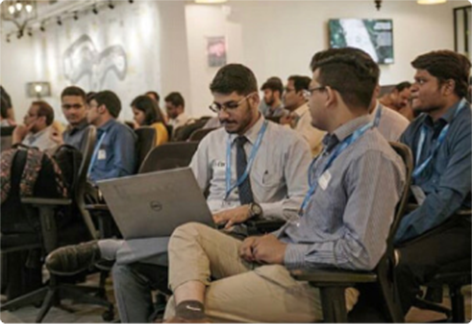
Live Online Learning

PROGRAMME BENEFITS

Real-World Class Students

MAXIMUM FLEXIBILITY

Week – End Live Interactive Session

Admission Process

Step - 1

Application submission + Upload of documents

Step - 2

Selection Process

Step - 3

Selection intimation and fee payment

Step - 4

Formal enrolment of the program